The Ultimate Mechanic’s Toolkit: Essential Sockets, Wrenches, and Ratchets for Professional Auto Repair
Whether you are a seasoned professional or a DIY enthusiast, the quality of your tools determines the success of your repair. A comprehensive mechanical tool set is the backbone of any garage. When tackling automotive tasks—from simple oil changes to complex engine overhauls—having the right combination of sockets, wrenches, and ratchets is non-negotiable.
Whether you are a seasoned professional or a DIY enthusiast, the quality of your tools determines the success of your repair. A comprehensive mechanical tool set is the backbone of any garage. When tackling automotive tasks—from simple oil changes to complex engine overhauls—having the right combination of sockets, wrenches, and ratchets is non-negotiable.


1. The Power of the Ratchet and Socket System
The heart of any auto repair kit is the ratchet. A high-quality ratchet allows you to loosen or tighten fasteners without removing the tool from the bolt, which is critical in cramped engine bays.
Drive Sizes: A versatile set should include 1/4-inch (for small, delicate tasks), 3/8-inch (the versatile standard), and 1/2-inch (for heavy-duty suspension and lug nuts) drives.
Socket Variety: Look for both metric and SAE (standard) sizes. Modern vehicles predominantly use metric, but having both ensures you are prepared for any bolt head.
Deep vs. Shallow: Deep sockets are essential for reaching nuts on long threaded bolts, while shallow sockets fit into tight spots.
The heart of any auto repair kit is the ratchet. A high-quality ratchet allows you to loosen or tighten fasteners without removing the tool from the bolt, which is critical in cramped engine bays.
Drive Sizes: A versatile set should include 1/4-inch (for small, delicate tasks), 3/8-inch (the versatile standard), and 1/2-inch (for heavy-duty suspension and lug nuts) drives.
Socket Variety: Look for both metric and SAE (standard) sizes. Modern vehicles predominantly use metric, but having both ensures you are prepared for any bolt head.
Deep vs. Shallow: Deep sockets are essential for reaching nuts on long threaded bolts, while shallow sockets fit into tight spots.
2. Precision with Combination Wrenches
While ratchets are fast, wrenches are indispensable for high-torque applications or where space is too narrow for a socket head.
Open-End vs. Box-End: A good set features combination wrenches—one side open for quick access and the other a closed box-end for a secure grip that prevents rounding off fasteners.
Chrome Vanadium Steel: Top-tier tools are forged from this alloy, providing maximum durability and corrosion resistance.


3. Efficiency Features to Look For
Modern auto repair tool kits are designed with the mechanic's workflow in mind:
Quick-Release Mechanisms: Allows for one-handed socket changes.
Fine-Tooth Gears: A 72-tooth or 90-tooth ratchet requires a smaller "swing arc" (5 degrees or less), making it much easier to work in confined spaces.
Ergonomic Grips: Anti-slip handles reduce hand fatigue during long repair sessions.
4. Organization and Portability
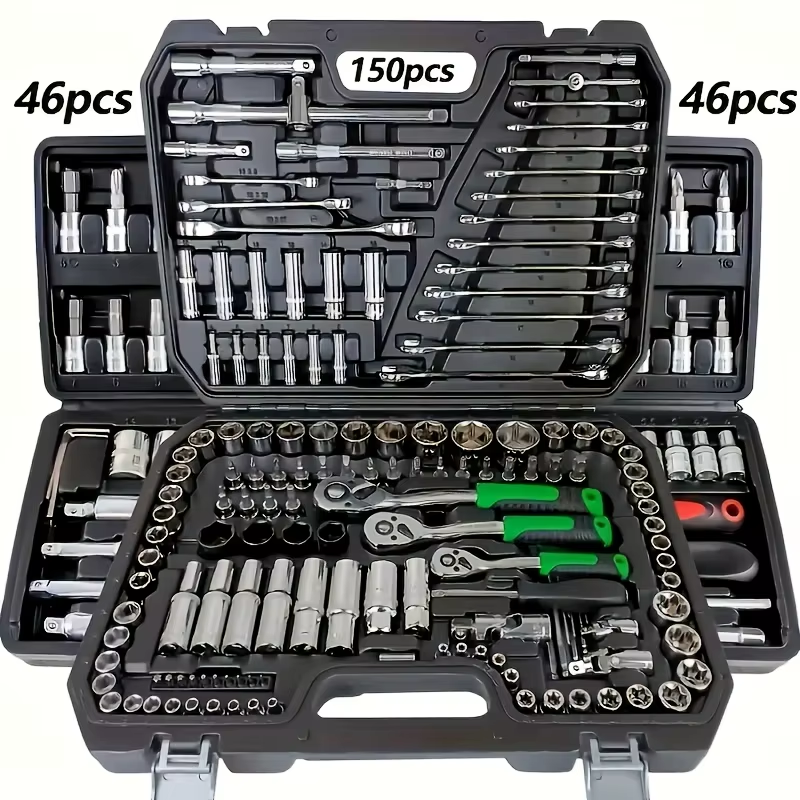
A disorganized toolbox is a mechanic's worst enemy. Premium sets come in heavy-duty blow-molded cases where every socket and wrench has a designated, labeled spot. This not only protects your investment from rust and damage but also allows for an instant inventory check before you close the hood.
Investing in a professional-grade mechanical tool set is an investment in your vehicle's longevity and your own safety. By choosing a set that balances a wide range of socket sizes with high-torque wrenches and precision ratchets, you ensure that no bolt stays stuck and no repair is out of reach.